Articles Tagged with BILL POWERS

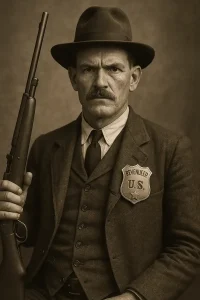
North Carolina law prohibits the possession, sale, and trafficking of controlled substances. Yet the same State that prosecutes those U.S. revenuer enforcing Prohibition laws in North Carolina, symbolizing state taxation, moonshine raids, and the roots of taxing crime. offenses also taxes and therefore profits them. Is that right? Does that make sense? Should the government profit from crime? Is it OK to tax Drugs? Extortion? What about Illegal Pornography, Prostitution and Human Trafficking? Where do we, the governed, draw the line?

The Controlled Substance Tax, codified at N.C.G.S. § 105-113.105, operates on the premise that illegal drugs have taxable value even though their sale and possession are criminal acts. The idea that “income is income” regardless of source smacks of Machiavelli and a willingness to bend basic moral imperatives. Beneath that procedural logic lies a troubling contradiction, if not outright hypocrisy.

Questions about punishment, profit, and fairness aren’t theoretical when you are the one standing before the court. North Carolina law distinguishes between fines, forfeiture, and taxation, but for clients facing criminal charges, those differences often feel academic. Bill Powers and the Powers Law Firm handle serious criminal matters in Mecklenburg, Union, Iredell, Gaston, Rowan, and Lincoln Counties, examining how the law operates in real courtrooms, not just in theory. Bill Powers is a widely regarded North Carolina criminal defense attorney, educator, and legal commentator with more than thirty-three years of courtroom and trial experience. He is recognized throughout the state for his work on impaired driving, criminal law, and legal education, and is a recipient of the North Carolina State Bar Distinguished Service Award. For select legal matters, Bill Powers consults on a statewide basis. To discuss your case in confidence, TEXT or call 704-342-4357.

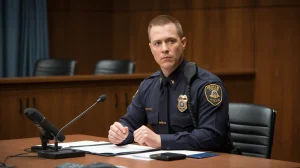
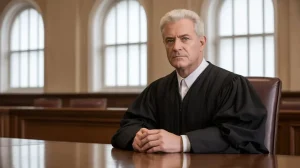
The Voluntary Intoxication defense in North Carolina criminal law is not an excuse for unlawful conduct but an evidentiary doctrine that can negate the specific intent North Carolina judge in courtroom illustrating the legal role of trial judges in voluntary intoxication defense cases involving specific intent crimes required for certain crimes. It is one of the most demanding defenses to raise, requiring a high threshold of proof.
Key Principles of the Voluntary Intoxication Defense

The defense operates as a rule of mental incapacity tied to the proof of mens rea (guilty mind), specifically in relation to specific intent crimes.

When is video evidence admissible?

Quick Take: In North Carolina vs. Ramsey (COA25-145, filed Oct. 1, 2025), the Court of Appeals approved admission of a short cell-phone clip for illustrative purposes:

  • Eyewitness testified it fairly and accurately depicted what was observed

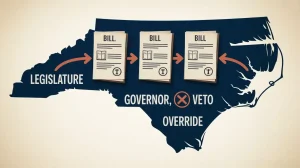
North Carolina’s concealed carry law may be on the verge of a historic change. Presently, you must still have a valid permit to carry aNorth Carolina concealed carry law infographic showing the legislative process for the 2025 permitless concealed carry bill, including the role of the legislature, governor’s veto, and override on a map of North Carolina concealed handgun. On July 29, 2025, the North Carolina Senate voted to override Governor Stein’s veto of Senate Bill 50, known as the “Freedom to Carry NC” act. In order for the law to go into effect, the NC House must also vote to override the veto by a three-fifths majority.
Until both chambers of the NC General Assembly vote to override the Governor’s veto, the existing concealed carry permit requirement remains in full force. As the law now stands, anyone who carries a concealed handgun in North Carolina without a valid permit or legal authority, is still subject to criminal prosecution.

If you are facing criminal charges, are under investigation in the Charlotte metro region, including Mecklenburg and Union County, and want more information about carrying a concealed weapon charges, contact Powers Law Firm for experienced, confidential guidance. TEXT or call now: 704-342-4357

Intermittent fasting has gained popularity for a range of personal and medical reasons, from weight management and metabolic INTERMITTENT-FASTING-AND-DRUNK-DRIVING-BAC-NORTH-CAROLINA health to religious observance and athletic discipline. While it may offer certain physiological benefits, fasting also triggers changes in the body’s metabolic pathways that may complicate the interpretation of forensic alcohol testing in DWI cases.

This can become relevant in North Carolina, where the outcome of driving while impaired charges hinge on the reliability of breath or blood alcohol test results.

Defense attorneys, prosecutors, judges, and forensic experts are occasionally called to consider whether intermittent fasting affects the body’s internal chemistry and the resulting reported BAC.

Should Eyelid Tremor Be Used to Prove Cannabis Impairment in North Carolina?

Drug-Impaired-Driving-Evidence-North-Carolina EYELID TREMOR

For years, the Drug Recognition Evaluator (DRE) protocol has relied on a structured set of physical observations to evaluate suspected drug impairment. Among these, the presence of eyelid tremor has been taught as a supposed sign of recent cannabis use. In practice, that means law enforcement officers conducting roadside evaluations or testifying in court may point to an eyelid tremor as evidence supporting probable cause or impairment. But as a recent study published in Clinical Toxicology makes clear, the scientific foundation for this assumption is, at best, unproven. At worst, it is affirmatively misleading.

In a 2024 peer-reviewed clinical research article by George Sam Wang and colleagues, the authors conducted a carefully controlled, blinded study to evaluate whether eyelid tremor could reliably and accurately be identified as a marker of recent cannabis use. The conclusion was clear. Eyelid tremor does not correlate with cannabis ingestion in a scientifically defensible way. Inter-rater reliability was poor to moderate. Specificity was dismal. And perhaps most importantly for DWI defense lawyers, the entire protocol used by officers to “spot” this supposed indicator would not come close to passing scientific muster in any peer-reviewed laboratory setting.

They didn’t show up all at once. A little around the temples after a run of back-to-back felony trials. A little more after a long, sleepless night waiting for a jury to come back on a case that could have gone either way. Years of courtroom advocacy and life as a lawyer will do that. So will running a firm.

Grey hair isn’t a metaphor. It’s evidence. It’s what happens when you practice law long enough to be responsible not just for your own caseload, but for other lawyers in the firm, other families, and the next generation trying to learn how to do this work the right way.

Lawyering isn’t the job they described to you in Law School

How much does a criminal lawyer cost in NC? That is one of the first and most important questions people ask when they are facing charges. The answer depends on several factors, including the type of charge, whether it is a misdemeanor or felony, how complex the case is, and how long it is expected to last.

This post explains how many criminal defense lawyers in North Carolina ordinarily set fees, what types of billing structures are common, and what is typically included and not included in those legal fees. Our goal is to give you a clear understanding of what to expect and how the process works.

While there is no statewide fee chart, a lot of private attorneys charge flat fees tailored to the specifics of your case.

Contact Information