Articles Tagged with Powers Law Firm

Improper Equipment is a non-moving violation in North Carolina that can sometimes be used to resolve a speeding ticket or other traffic charge. While getting pulled IMPROPER-EQUIPMENT-SPEEDING-TICKET-LAWYERS IMAGE OF A POLICE CAR CHASING A SPEEDER over is frustrating, a bigger problem may come later with DMV points, insurance hikes, and in some cases, the risk of license suspension.

In appropriate circumstances, resolving the ticket as “Improper Equipment” can be helpful. Known informally as “IE,” it isn’t available in every case, but when used properly, it can protect your record and help keep your insurance rates in check.

If you’ve been issued a traffic ticket in Mecklenburg County or Union County NC, the Powers Law Firm PA is available to answer your questions and possibly help.  Please TEXT or call 704-342-4357.

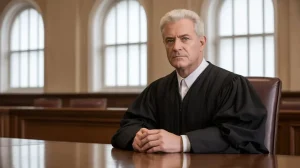
They didn’t show up all at once. A little around the temples after a run of back-to-back felony trials. A little more after a long, sleepless night waiting for a jury to come back on a case that could have gone either way. Years of courtroom advocacy and life as a lawyer will do that. So will running a firm.

Grey hair isn’t a metaphor. It’s evidence. It’s what happens when you practice law long enough to be responsible not just for your own caseload, but for other lawyers in the firm, other families, and the next generation trying to learn how to do this work the right way.

Lawyering isn’t the job they described to you in Law School

How much does a criminal lawyer cost in NC? That is one of the first and most important questions people ask when they are facing charges. The answer depends on several factors, including the type of charge, whether it is a misdemeanor or felony, how complex the case is, and how long it is expected to last.

This post explains how many criminal defense lawyers in North Carolina ordinarily set fees, what types of billing structures are common, and what is typically included and not included in those legal fees. Our goal is to give you a clear understanding of what to expect and how the process works.

While there is no statewide fee chart, a lot of private attorneys charge flat fees tailored to the specifics of your case.

“They never read me my Miranda rights!” This is one of the most common statements criminal defense attorneys hear from clients who believe this oversight will automatically get their charges dismissed. Unfortunately, this widespread misconception, fueled by countless TV shows and movies, rarely reflects the reality of North Carolina criminal law.

If you’ve been arrested and are wondering about your Miranda rights, understanding when they actually apply and when they don’t could make a significant difference in your case.

If you’ve been charged with misdemeanor death by vehicle in Mooresville or felony death by vehicle in the Charlotte metro region, it’s a good idea to consult an experienced North Carolina criminal defense lawyer. The criminal defense legal team at Powers Law Firm understand the intricacies of vehicular homicide cases and may be available to serve as legal counsel and guide you through your legal options. Call or TEXT 704-342-4357 to schedule a confidential consultation.

The Debate Over Ratification and the Demand for a Bill of Rights

In the aftermath of the 1787 Constitutional Convention, the proposed United States Constitution went to the states for approval. North Carolina emerged as a critical battleground in this ratification debate. Many North Carolinians were divided between Federalists, who supported the new Constitution as written, and Anti-Federalists, who feared it granted too much unchecked power to a central government.

The absence of a clear list of guaranteed individual rights in the federal Constitution became a focal point. North Carolina’s citizensBILL-OF-RIGHTS-NC IMAGE REPRESENTING NORTH CAROLINA had fresh memories of British abuses of power before and during the Revolutionary era. They worried that without explicit protections, such as safeguards against arbitrary searches and seizures or other infringements, a new federal government might oppress the people just as past tyrannies had. This concern for fundamental liberties set the stage for North Carolina’s insistence on a Bill of Rights.

The Rule of Law is not just a value, a tradition, or a preference. It is the operating principle of RULE-OF-LAW the United States government and the foundation upon which legal rights, public institutions, and constitutional safeguards depend.

The Rule of Law in the United States does not mean that laws are always fair. It does not mean that legal outcomes are always just.

It means that law, rather than arbitrary power, determines how authority is exercised. It means that no person is above the law.

Every criminal defendant is entitled to a fundamentally fair trial. In North Carolina’s two-tier system, a defendant convicted in District Court (the lower criminal court) TRIAL-DE-NOVO-IN-NC can  seek an appeal from district criminal court to Superior Court for a fresh trial. But does this trial de novo appeal truly safeguard the right to a fair trial?

This post examines North Carolina’s two-tier criminal court structure and asks whether a trial de novo on appeal fully cures defects in the original proceeding. We explore statutory law (e.g. N.C.G.S. §§ 7A-271, 15A-1431), constitutional due process principles, and key cases – notably Ward v. Monroeville, 409 U.S. 57 (1972) – to assess if a defendant receives meaningful due process in the court of first instance. Legal professionals will recognize the tension between efficiency and fairness inherent in North Carolina’s system, and the question of whether the promise of a new trial compensates for any shortcomings at the District Court trial setting.

If you’re facing a legal issue and need clarity about the process or your next steps, call or TEXT Powers Law Firm at 704-342-4357 to see whether our defense attorneys are available to assist.

Being charged with a sex offense in North Carolina, regardless of whether there is a dismissal, can have long-term legal and personal consequences. While the formal legal CHARGED-BUT-DISMISSED obligations that apply after a conviction, such as sex offender registration or satellite-based monitoring, do not automatically attach to a pending charge, there are circumstances in which an arrest or charge alone can affect a defendant’s rights, freedom, and access to legal relief.

This post examines what happens when someone is charged with a registrable sex offense in North Carolina but is not convicted at trial or the state files a voluntary dismissal. It explains the legal significance of the charge, how it may affect pretrial release and eligibility for things like firearm rights restoration, expunction, or registration termination. It also addresses the broader consequences that can arise even when a charge is later dismissed or results in acquittal.

If you’ve been charged with a serious offense in Mecklenburg, Union, Gaston, Iredell, or Lincoln County and need to understand what that might mean for your future, call or TEXT Powers Law Firm at 704-342-4357 to see whether we’re available to assist.

Satellite-based monitoring (SBM) is a form of long-term electronic surveillance imposed by the courts in certain criminal cases Satellite-Based-Monitoring involving sex offenses in North Carolina. Although it shares some similarities with electronic monitoring during probation, SBM is not limited to a period of court supervision. It can continue for years after release from prison and, in some cases, may be imposed for life.

The purpose of satellite-based monitoring is to track the physical location of convicted offenders who are deemed to pose a higher risk of committing further offenses, particularly those involving minors or repeated sexual conduct. Since its adoption, the program has been revised in response to evolving legal challenges and constitutional concerns. As of late 2023, the laws governing SBM have changed again, lengthening some monitoring periods and clarifying eligibility standards.

This post explains what SBM is, who qualifies for it, how courts determine the length of monitoring, and what daily life looks like for those subject to the program. It also addresses the legal and constitutional context that shapes how North Carolina applies this form of surveillance.

In North Carolina, the legal obligation to register as a sex offender does not apply to every offense that involves sexual behavior. Instead, the state defines a specific group SEX-OFFENDER-REGISTRATION-IN-NC of criminal convictions, called “reportable convictions,” that trigger mandatory registration. Understanding who must register, how the law defines qualifying offenses, and how long those obligations last is essential for anyone facing charges that might carry these consequences.

This post explains the legal framework for sex offender registration in North Carolina, including how reportable convictions are defined, how aggravated status or recidivism affects the rules, and how long a person remains on the registry after registration. It also addresses related factors such as offense dates, eligibility for termination, and legal distinctions between standard and aggravated registration programs.

If you’re facing serious criminal charges in Mecklenburg, Union, Iredell, Gaston, or Lincoln County, and need to understand what’s at stake, call or TEXT Powers Law Firm at 704-342-4357. We may be available to assist.

Contact Information