*For additional information regarding the criterion for inclusion or membership for lawyer associations, awards, & certifications click image for link.

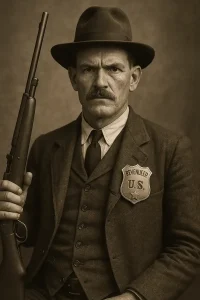
North Carolina law prohibits the possession, sale, and trafficking of controlled substances. Yet the same State that prosecutes those U.S. revenuer enforcing Prohibition laws in North Carolina, symbolizing state taxation, moonshine raids, and the roots of taxing crime. offenses also taxes and therefore profits them. Is that right? Does that make sense? Should the government profit from crime? Is it OK to tax Drugs? Extortion? What about Illegal Pornography, Prostitution and Human Trafficking? Where do we, the governed, draw the line?
The Controlled Substance Tax, codified at N.C.G.S. § 105-113.105, operates on the premise that illegal drugs have taxable value even though their sale and possession are criminal acts. The idea that “income is income” regardless of source smacks of Machiavelli and a willingness to bend basic moral imperatives. Beneath that procedural logic lies a troubling contradiction, if not outright hypocrisy.

Questions about punishment, profit, and fairness aren’t theoretical when you are the one standing before the court. North Carolina law distinguishes between fines, forfeiture, and taxation, but for clients facing criminal charges, those differences often feel academic. Bill Powers and the Powers Law Firm handle serious criminal matters in Mecklenburg, Union, Iredell, Gaston, Rowan, and Lincoln Counties, examining how the law operates in real courtrooms, not just in theory. Bill Powers is a widely regarded North Carolina criminal defense attorney, educator, and legal commentator with more than thirty-three years of courtroom and trial experience. He is recognized throughout the state for his work on impaired driving, criminal law, and legal education, and is a recipient of the North Carolina State Bar Distinguished Service Award. For select legal matters, Bill Powers consults on a statewide basis. To discuss your case in confidence, TEXT or call 704-342-4357.
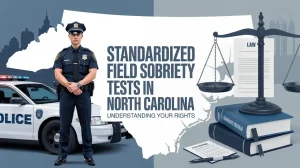
This post continues the Breath, Blood, and Bull series, an in-depth look at how science, procedure, and perception collide in the North Carolina standardized field sobriety tests illustration with police officer patrol car law books and scales of justice for DWI rights education prosecution and defense of DWI cases in North Carolina. The first installment examined the limits of chemical testing. The second article turned to the machines that interpret alcohol breath samples into evidence, using the “breathalyzer.” This post focuses on the field sobriety tests or “SFSTs” that often precede BAC testing.
Standardized Field Sobriety Tests (SFSTs) are a battery of three roadside exercises: Horizontal Gaze Nystagmus (HGN), Walk-and-Turn (WAT), and One-Leg Stand (OLS), designed by NHTSA to gauge impairment.

When prosecutors rely on Standardized Field Sobriety Tests to support a DWI charge, the assumption is that these dexterity exercises offer reliable, objective proof of impairment. Yet the science tells a more complicated story.

The North Carolina Court of Appeals’ decision in State v. Hickman (COA24-893, filed November 5, 2025) revisits a foundational Civil warrants and criminal searches in North Carolina courtroom scene symbolizing Fourth Amendment protections and limits question in constitutional law. When government agents enter private property without a warrant, what happens to the evidence they obtain?
While the case involves a Department of Revenue tax warrant rather than a traditional criminal investigation, its implications extend beyond tax collection. It clarifies the continuing role of the Fourth Amendment and Article I, Section 20 of the North Carolina Constitution in protecting private dwellings from unauthorized searches and seizures.

The opinion also reaffirms an older, quieter truth that sometimes gets lost in modern exclusionary-rule debate.

The Voluntary Intoxication defense in North Carolina criminal law is not an excuse for unlawful conduct but an evidentiary doctrine that can negate the specific intent North Carolina judge in courtroom illustrating the legal role of trial judges in voluntary intoxication defense cases involving specific intent crimes required for certain crimes. It is one of the most demanding defenses to raise, requiring a high threshold of proof.
Key Principles of the Voluntary Intoxication Defense

The defense operates as a rule of mental incapacity tied to the proof of mens rea (guilty mind), specifically in relation to specific intent crimes.

The Limits of Chemical Certainty: The Auto-Brewery Syndrome & DWI Charges 

Auto-Brewery Syndrome (ABS) remains a bit of a theoretical curiosity. It represents a measurable biochemical anomaly during which yeast or bacteria residing in the gastrointestinal tract convert carbohydrates into ethanol within the human body. North Carolina judge in a courtroom setting representing judicial evaluation of scientific evidence and credibility in DWI cases involving Auto-Brewery Syndrome

Though somewhat rare, it is medically documented, scientifically verifiable in some instances, and possibly legally consequential, at  least relative to DUI charges in North Carolina. 

Voluntary intoxication occupies one of the narrowest spaces in North Carolina criminal law. It is not a general justification for unlawful conduct, nor is it a plea for North Carolina judge in courtroom reflecting on voluntary intoxication defense and the legal standard for criminal charges involving specific intent crimes sympathy.

Instead, voluntary intoxication functions as a limited doctrine that may, under rare circumstances, negate the specific intent required for particular crimes.

The defense reflects a long-standing tension between moral accountability and the requirement that the State prove intent beyond a reasonable doubt.

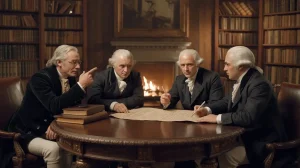
TL;DR Quick Take: The legacy of North Carolina v. Rogers reaches beyond suppression hearings. It redefines how courts balance Founding-era statesmen drafting a constitution in a historic law library with quill pens and parchment, symbolizing the creation of the North Carolina State Constitution and early American constitutional law government trust against the structural necessity of constitutional discipline. Whether this evolution strengthens justice or weakens liberty depends on how future courts interpret the limits of “reasonableness” in applying the Good Faith Exception to the Exclusionary Rule.
I. Constitutional Remedies and the Philosophy of Enforcement

Constitutional rights mean little without remedies that make them enforceable. The framers of the US Constitution understood this when they created mechanisms to restrain power through process.

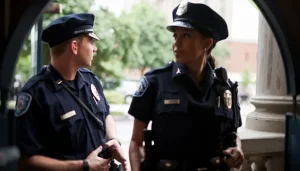
If a “knock and talk” crosses the constitutional line, can what officers saw or learned still justify Two uniformed police officers standing at a doorway during a knock and talk investigation in North Carolina, illustrating Fourth Amendment search and seizure and probable cause issues in criminal defense cases a search warrant?

TL;DR Quick Take: North Carolina v. Norman tests the limits of North Carolina’s knock and talk doctrine and asks whether a search warrant can survive when officers use observations gathered during a questionable encounter on private property.

The decision turns on three interrelated questions:

This post continues the Breath, Blood, and Bull series, which explores how science, technology, and human judgment shape DWI Police officer speaking with a driver during a traffic stop, illustrating field sobriety and breath testing procedures in North Carolina DWI investigations enforcement in North Carolina.

The first article examined the limits of field sobriety testing. This installment turns to the machines that translate breath into evidence, using “breathalyzers.”

By unpacking how they measure alcohol, where they can fail, and how lawyers challenge their results, you’ll see why science is not necessarily as simple as a number on a printout.

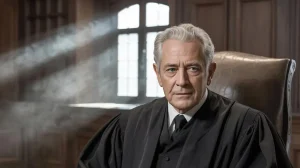
Judicial activism is one of the most debated concepts in American constitutional law. It describes a form of judicial behavior in which Judge seated in a courtroom, wearing a black robe with sunlight filtering through a window, symbolizing judicial authority, reflection, and the debate over judicial activism in American constitutional law courts are perceived to go beyond interpreting the law and instead make policy choices that belong to the political branches.

To its critics, judicial activism threatens the separation of powers and undermines democratic accountability.

To its defenders, it represents a necessary means of protecting rights when elected officials fail to do so.