 Carolina Criminal Defense & DUI Lawyer Updates
11 arrested in Charlotte DWI Checkpoint 022315
LEGAL REFERENCE MATERIALS – Tracking Checkpoint Locations 2015 Charlotte-Metro Region –
North Carolina Rules of Evidence
Modified Transcript of “DWI Burdens of Proof” for Hearing Impaired:
The third burden of proof that the state has to satisfy when we’re speaking about a prosecution for DWI, I’m just going to refer to as criminal procedure at large. When we’re talking about reasonable suspicion, typically we’re talking about the stop. When we’re talking about probable cause, we’re typically just talking about the arrest. Criminal procedure at large we’re talking about the process as a whole, but not from a factual end necessarily, but from a procedural one.
https://www.youtube.com/watch?v=OFWU702u-w8
Modified Transcript of “Reasonable Suspicion To Stop” for Hearing Impaired:
. . .By a reasonable and articulable suspicion that the person seized is engaged in criminal activity.
https://www.youtube.com/watch?v=0vaA-zMKxu8
In criminal cases, whether it’s a DUI or a misdemeanor, even a felony – heck, even traffic tickets – it’s not unusual to have a client later fess up when they’re talking to us in the office and say “I didn’t tell the truth to the officer.” Now, that’s not unusual. People get nervous. They don’t always answer the right way.
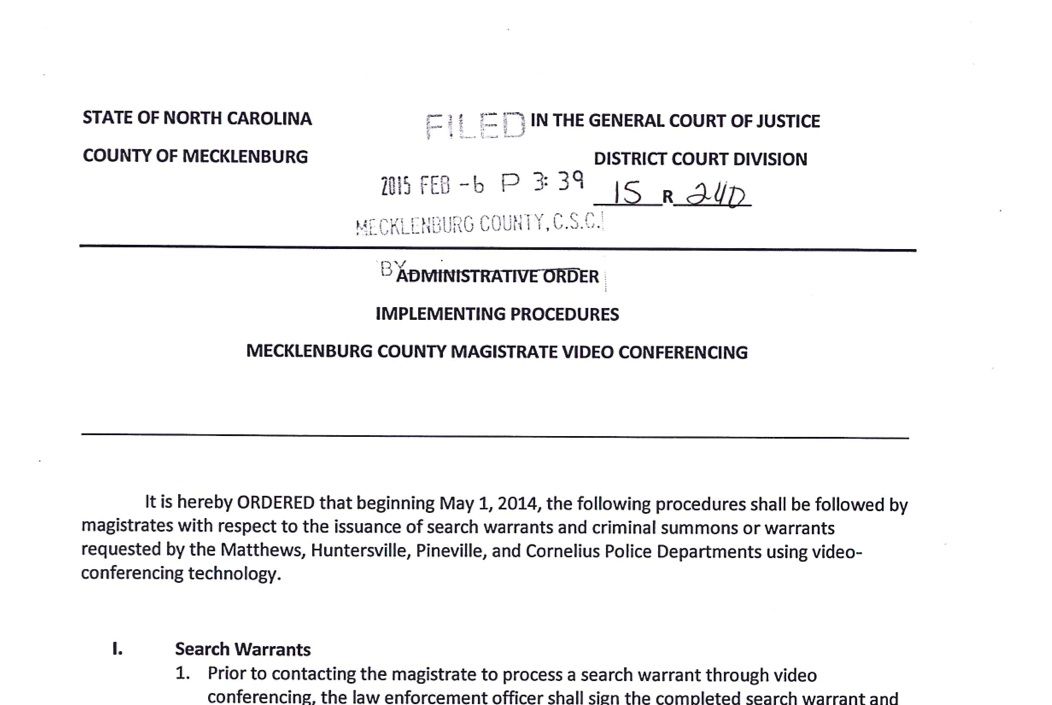
See Judge Miller’s Administrate Order: Magistrate Videoconferencing
North Carolina General Statute NCGS 20-16.2 “Implied Consent to Chemical Analysis” sets forth some of the different protocols we follow in North Carolina in obtaining a Blood Alcohol Content BAC and/or an BrAC or “Breath Alcohol Content” and reads in relevant part:
§ 20-16.2. Implied consent to chemical analysis; mandatory revocation of license in event of refusal; right of driver to request analysis.
When someone you love is arrested and taken to the Mecklenburg County Detention Center (Jail), one of the first questions families ask is  simple and urgent, “Will a lawyer go see them in jail?”
The answer is yes, attorneys routinely visit clients at the jail. Defense counsel are authorized to meet with incarcerated clients during attorney visitation hours upon presentation of valid credentials. The Mecklenburg County Sheriff’s Department does not require defense attorneys to reserve visits through the public scheduling systems used for social visitation. Lawyers regularly appear in person to consult with detained clients without advance scheduling when jail operations and court timing allow.
But the fuller explanation is more nuanced. Whether a lawyer actually can meet with a new client in jail before a first court appearance depends far more on time and logistics than permission and the process of going to the Mecklenburg County Jail Intake facility to visit your loved one.
https://www.youtube.com/watch?v=JNnwMGgi7Ds
Attorney Bill Powers is the managing partner of Powers Law Firm PA, pllc in Charlotte, North Carolina. He is a regular commentator on developing legal trends, laws, court procedures, trials and pending legislation on North Carolina Law Talk. Bill is the Vice President of Communications for the North Carolina Advocates for Justice and was selected by the Governor of North Carolina as a member of the Governor’s Statewide Impaired Driving Task Force. Bill Powers was named to SuperLawyers North Carolina Magazine “Top 100” in North Carolina in calendar years 2012, 2013 & 2014. For more information regarding the membership information and criterion for inclusion, please visit SuperLawyers.com.