Articles Tagged with attorney bill powers

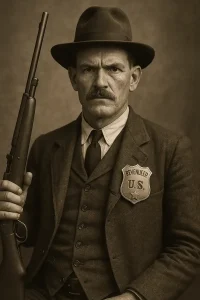
North Carolina law prohibits the possession, sale, and trafficking of controlled substances. Yet the same State that prosecutes those U.S. revenuer enforcing Prohibition laws in North Carolina, symbolizing state taxation, moonshine raids, and the roots of taxing crime. offenses also taxes and therefore profits them. Is that right? Does that make sense? Should the government profit from crime? Is it OK to tax Drugs? Extortion? What about Illegal Pornography, Prostitution and Human Trafficking? Where do we, the governed, draw the line?

The Controlled Substance Tax, codified at N.C.G.S. § 105-113.105, operates on the premise that illegal drugs have taxable value even though their sale and possession are criminal acts. The idea that “income is income” regardless of source smacks of Machiavelli and a willingness to bend basic moral imperatives. Beneath that procedural logic lies a troubling contradiction, if not outright hypocrisy.

Questions about punishment, profit, and fairness aren’t theoretical when you are the one standing before the court. North Carolina law distinguishes between fines, forfeiture, and taxation, but for clients facing criminal charges, those differences often feel academic. Bill Powers and the Powers Law Firm handle serious criminal matters in Mecklenburg, Union, Iredell, Gaston, Rowan, and Lincoln Counties, examining how the law operates in real courtrooms, not just in theory. Bill Powers is a widely regarded North Carolina criminal defense attorney, educator, and legal commentator with more than thirty-three years of courtroom and trial experience. He is recognized throughout the state for his work on impaired driving, criminal law, and legal education, and is a recipient of the North Carolina State Bar Distinguished Service Award. For select legal matters, Bill Powers consults on a statewide basis. To discuss your case in confidence, TEXT or call 704-342-4357.

Due process is one of the most enduring phrases in the American constitutional tradition. It appears in the Fifth Amendment, binding the federal government, and in the Fourteenth Amendment, extending the guarantee to the states.

North Carolina’s Constitution also secures due process through Article I, Section 19, which provides that no person shall be deprived of life, liberty, or property except by the “law of the land.”

Far from being ornamental language, due process reflects a working system of legal discipline that reaches from Magna Carta through North Carolina’s founding conventions into the daily practice of its courts.

Eagle Springs Lake in Waukesha County is not a place you stumble upon. It sits tucked away, a Canada geese gliding across the calm morning water at the family lake home of the Powers family on Eagle Springs Lake, Wisconsin, during Bill Powers’ day of respite spring-fed lake that has quietly carried on its rhythms for generations.

For my family, the Powers name has been tied to this water for more than 100 years. That is not a casual stretch of time.

It means cottages built and rebuilt, fishing poles passed down, birthdays celebrated, and the long cycle of summers and winters shaping what the lake means to us.

Satellite-based monitoring (SBM) is a form of long-term electronic surveillance imposed by the courts in certain criminal cases Satellite-Based-Monitoring involving sex offenses in North Carolina. Although it shares some similarities with electronic monitoring during probation, SBM is not limited to a period of court supervision. It can continue for years after release from prison and, in some cases, may be imposed for life.

The purpose of satellite-based monitoring is to track the physical location of convicted offenders who are deemed to pose a higher risk of committing further offenses, particularly those involving minors or repeated sexual conduct. Since its adoption, the program has been revised in response to evolving legal challenges and constitutional concerns. As of late 2023, the laws governing SBM have changed again, lengthening some monitoring periods and clarifying eligibility standards.

This post explains what SBM is, who qualifies for it, how courts determine the length of monitoring, and what daily life looks like for those subject to the program. It also addresses the legal and constitutional context that shapes how North Carolina applies this form of surveillance.

In North Carolina, the legal obligation to register as a sex offender does not apply to every offense that involves sexual behavior. Instead, the state defines a specific group SEX-OFFENDER-REGISTRATION-IN-NC of criminal convictions, called “reportable convictions,” that trigger mandatory registration. Understanding who must register, how the law defines qualifying offenses, and how long those obligations last is essential for anyone facing charges that might carry these consequences.

This post explains the legal framework for sex offender registration in North Carolina, including how reportable convictions are defined, how aggravated status or recidivism affects the rules, and how long a person remains on the registry after registration. It also addresses related factors such as offense dates, eligibility for termination, and legal distinctions between standard and aggravated registration programs.

If you’re facing serious criminal charges in Mecklenburg, Union, Iredell, Gaston, or Lincoln County, and need to understand what’s at stake, call or TEXT Powers Law Firm at 704-342-4357. We may be available to assist.

The exclusionary rule is a foundational principle in American criminal law. While it traces its origins to federal constitutional doctrine, it now plays a central role in everyday trial practice, including in state courtrooms across North Carolina. The rule is most often encountered through motions to suppress evidence, but its reach extends further, sometimes forming the basis for a motion to dismiss when the taint of unlawful police conduct affects more than a single piece of evidence. To understand why the rule exists and how it functions, it helps to examine both its historical roots and its practical application today.

Though courts often describe the exclusionary rule as a remedy, its function is broader than that. It reflects an institutional decision to draw a line between the conduct of law enforcement and the integrity of the courts. It limits what the State may use to prosecute someone when a constitutional violation has occurred. And while it can lead to the suppression of important or even decisive evidence, the logic behind the rule rests on the idea that constitutional limits on police conduct are only meaningful if they carry enforceable consequences.

The Exclusionary Rule in Constitutional and Historical Context

When a fatal collision occurs on North Carolina’s roads, the legal system doesn’t apply a one-size-fits-all response. In cases involving loss of life, prosecutors may consider FELONY-DEATH-BY-VEHICLE-IN-NORTH-CAROLINA a range of charges depending on the circumstances. Two of the most serious offenses are Felony Death by Vehicle and Second-Degree Murder.

While both carry the weight of a felony conviction and serious sentencing exposure, they are grounded in different legal theories and involve distinct statutory frameworks.

This article examines how these charges are defined under North Carolina law, what legal elements separate them, and why the difference matters—not just to lawyers and judges, but to anyone trying to understand how the state treats fatal driving cases.

Orders for Arrest OFA and Mecklenburg County Warrants:  What Happens if I have a Warrant for Arrest?

If you have questions about an “OFA” or an outstanding warrant in NC, our team of Charlotte criminal defense lawyers is here to help.

It’s important to immediately address any outstanding legal process, whether it be a Criminal Summons in North Carolina, an Order for Arrest (OFA) or Warrant for Arrest or “Arrest Warrant” – Bill Powers 

Can I Dismiss Charges?  What Happens If I Don’t Want to Prosecute? Do I Get a Say?  Who Decides?

Can you drop the charges? Not really. Can the State choose not to prosecute? Yes, in large measure it’s their decision – Bill Powers

Prosecutors sometimes consider and weigh these case facts before deciding to prosecute an individual:

NCAJ President Bill Powers – Spring 2017 Trial Briefs – Reap a Harvest of Justice for All

Let us not become weary in doing good, for at the proper time we will reap a harvest if we do not give up 

Download Full Article:  Harvest of Justice for All 2017

Contact Information