Articles Tagged with Search and Seizure Law

The North Carolina Court of Appeals’ decision in State v. Hickman (COA24-893, filed November 5, 2025) revisits a foundational Civil warrants and criminal searches in North Carolina courtroom scene symbolizing Fourth Amendment protections and limits question in constitutional law. When government agents enter private property without a warrant, what happens to the evidence they obtain?

While the case involves a Department of Revenue tax warrant rather than a traditional criminal investigation, its implications extend beyond tax collection. It clarifies the continuing role of the Fourth Amendment and Article I, Section 20 of the North Carolina Constitution in protecting private dwellings from unauthorized searches and seizures.

The opinion also reaffirms an older, quieter truth that sometimes gets lost in modern exclusionary-rule debate.
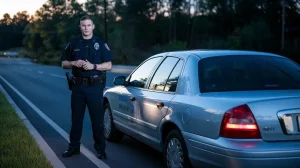
The Supreme Court of North Carolina’s opinion in North Carolina v. Rogers (Oct. 17, 2025) deserves careful study by Police officer standing beside a stopped car in North Carolina at dusk, representing the good faith exception to the exclusionary rule and Fourth Amendment search and seizure law. criminal defense and DUI defense lawyers.

TL;DR Quick Take North Carolina v. Rogers reshapes how certain suppression motions may be litigated in North Carolina. The Supreme Court interpreted the 2011 “good faith” amendment to N.C.G.S. §15A-974 as significantly limiting the scope of the exclusionary rule, allowing evidence obtained through unlawful searches to be admitted if officers relied on objectively reasonable belief in the legality of their conduct. The decision narrows the path for defendants seeking suppression and marks a turning point in how trial courts evaluate Fourth Amendment violations.

Editor’s Note: The Supreme Court’s decision in State v. Rogers addressed good-faith reliance on a judicial order, not warrantless arrests or searches. The opinion leaves open whether the same reasoning will apply to warrantless seizures or probable-cause challenges. For now, Rogers appears to narrow the exclusionary rule only in the context of judicially authorized warrants and orders.

Contact Information