Articles Tagged with dwi defense

This post continues the Breath, Blood, and Bull series, an in-depth look at how science, procedure, and perception collide in the North Carolina standardized field sobriety tests illustration with police officer patrol car law books and scales of justice for DWI rights education prosecution and defense of DWI cases in North Carolina. The first installment examined the limits of chemical testing. The second article turned to the machines that interpret alcohol breath samples into evidence, using the “breathalyzer.” This post focuses on the field sobriety tests or “SFSTs” that often precede BAC testing.
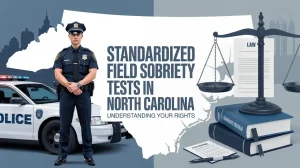
Standardized Field Sobriety Tests (SFSTs) are a battery of three roadside exercises: Horizontal Gaze Nystagmus (HGN), Walk-and-Turn (WAT), and One-Leg Stand (OLS), designed by NHTSA to gauge impairment.

When prosecutors rely on Standardized Field Sobriety Tests to support a DWI charge, the assumption is that these dexterity exercises offer reliable, objective proof of impairment. Yet the science tells a more complicated story.
Witnesses with specialized knowledge beyond that of a jury may in appropriate circumstances provide “expert testimony” in North Carolina. DWI (Driving While Impaired) charges in North Carolina regularly include evidence like breathalyzer results, bloodEXPERT-WITNESS-TESTIMONY tests, and standardized field sobriety tests.
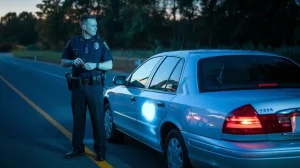
Given the scientific, forensic, and at times highly technical aspects of impaired driving cases, testimony may include qualification in court of expert witnesses and  consideration of NC Rule of Evidence 702 (the rule governing experts and expert testimony). In some circumstances, the formal process of qualification is not required if the police officer is certified by the State of North Carolina as a DRE – Drug Recognition Expert. It can, frankly, prove to be a complicated area of law.

At Powers Law Firm, our attorneys understand the impact that credible experts can have in DWI trials and how critical it is to get reliable evidence before the finder of fact. That may entail both challenging the State’s attempts to tender a police officer as an “expert” and introducing a defense expert to counter the conclusion of the State’s witness and their expert testimony.

DUI checkpoints ordinarily involve standardized patterns for stopping vehicles, as well as the use of portable breath tests (PBTs) and SFSTs – Standardized Field Sobriety Tests to assess possible alcohol consumption and appreciable impairment. North Carolina law allows law enforcement agencies to set up checking stations and roadblocks pursuant to N.C.G.S. 20-16.3A to check for things likeDUI-CHECKPOINTS license violations and to enforce the “drunk driving” (impaired driving) laws. The process must follow certain constitutional and statutory guidelines to avoid arbitrary or discriminatory stops.

The following content is a general overview of how roadblocks and checking stations work, including the difference between a brief roadside stop and a more formal implied-consent procedure. If you have questions about a checkpoint stop in North Carolina—or wish to talk about a specific legal concern related to N.CG.S. 20-16.3A—call or text the Powers Law Firm at 704-342-4357, or email Bill Powers at Bill@CarolinaAttorneys.com

https://www.youtube.com/watch?v=goGJzTA-zuU

Modified Transcript of “DWI Below the Legal Limit” for the Hearing Impaired:

One of the things that we hear about from a lot of our clients, and it’s a great question, is, “Hey, if I am not 0.08 or higher, can they actually hang DWI on me?

Contact Information