 Carolina Criminal Defense & DUI Lawyer Updates
Miranda rights in North Carolina give real effect to the Fifth Amendment privilege against compelled self-incrimination. Miranda becomes relevant the moment law 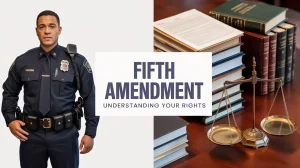 enforcement transitions from general investigation to custodial interrogation, limiting what officers may ask before warnings (the advisement of legal rights) are given and what statements prosecutors may later use at trial.
The December 2025 decision of the North Carolina Court of Appeals in State v. Mitchell provides an illustration of how Miranda is applied in real-life, sometimes complicated scenarios. Miranda disputes are resolved by analyzing custody and interrogation standards, not the outward circumstances of a search or arrest. It can be an opaque (at times) doctrinal line between permissible police questions and unconstitutional interrogation.
If you have questions about your Miranda rights in North Carolina or are uncertain whether law enforcement complied with Fifth Amendment protections, Bill Powers at the Powers Law Firm has more than thirty years of practical courtroom experience handling criminal charges in North Carolina. Bill Powers is a widely recognized defense attorney dedicated to legal education and advocacy. He is a former President of the North Carolina Advocates for Justice and a recipient of the North Carolina State Bar Distinguished Service Award. Call or text 704-342-4357 to schedule a confidential consultation.
Miranda Rights in North Carolina: When Does Custodial Interrogation Actually Begin?
Miranda Rights apply when two conditions exist simultaneously.
First, the accused must be in custody. Second, they must be subjected to interrogation.
In North Carolina, custodial status hinges on whether a reasonable person would feel that their freedom of movement is restrained to the degree associated with a formal arrest.
Handcuffing is not strictly required, but once a defendant is arrested or physically detained in a manner equivalent to a formal arrest, law enforcement has placed the person in custody.
A brief investigatory detention under Terry v. Ohio, including temporary handcuffing for officer safety, does not automatically constitute custody for Miranda purposes.
North Carolina courts evaluate whether a detention has escalated into custody based on the totality of the circumstances, including the duration of the stop, the degree of restraint, the presence of drawn weapons, officer conduct, and whether a reasonable person would believe they were free to leave.
Interrogation is defined under both federal and North Carolina constitutional law as words or actions by police that officers should know are reasonably likely to elicit an incriminating response.
An interrogation may extend beyond direct questioning that overtly seeks a confession. It includes any police conduct designed or reasonably expected to prompt a suspect to provide information (an inculpatory statement) that may be used to establish guilt.
North Carolina recognizes a narrow exception for clarifying questions asked in response to spontaneous volunteered statements made during emotionally charged or immediate encounters. They may also be referred to as a “spontaneous utterance.”
However, the logic of clarifying questions is subject to limitations. North Carolina cases have consistently emphasized timing and purpose.
Once police have secured custody, the situation has stabilized, and officers have the opportunity to reflect upon their investigative objectives, subsequent questioning shifts into interrogation if it reasonably invites an incriminating response.
Questions no longer focused on clarification of a spontaneous remark but on advancing an evidentiary narrative may, in fact, cross the constitutional line.
| Lawful Police Conduct | Custodial Interrogation Requiring Miranda |
|---|---|
| General investigation when a person is not in custody | Questioning after a person is arrested or restrained to the degree associated with arrest |
| Voluntary, spontaneous statements not prompted by the police | Questions or conduct that police should know are likely to elicit an incriminating response |
| Immediate clarifying questions following a spontaneous remark | Narrative advancing questions asked after custody is established |
| Safety-based questioning during a brief investigatory detention | Questioning once detention becomes custodial |
| Temporary restraint such as handcuffing during a Terry stop for officer safety | Questioning that occurs after formal arrest or custodial restraint |
| Statements offered without police prompting | Statements elicited through unwarned custodial questioning |
| Evidence gathered before custody attaches | Statements obtained after custody begins without Miranda warnings |
| Independent physical evidence | Evidence derived primarily from unconstitutional custodial statements |
| Fully admissible conduct | Constitutional violations that may require suppression of statements |
The Legal Issue at the Center of State v. Mitchell
In North Carolina v Mitchell, law enforcement arrived at a farmhouse containing visible drug paraphernalia. The defendant had already been handcuffed and was in custody. Several minutes passed while officers waited for a supervising lieutenant to arrive. No urgent public safety issue existed, as the scene was controlled and the defendant restrained. When the lieutenant arrived, he asked the group, including the defendant, a neutral-sounding but legally consequential question, “Who lives here?”
The Court of Appeals concluded that inquiry amounted to a custodial interrogation intended to result in a potential inculpatory response.
The officer knew the property belonged to another person, observed substantial drug paraphernalia throughout the residence, and understood that an admission of residency could link the defendant to illegal drugs and firearms later found in the home.
As such, an affirmative answer would reasonably be expected to create incriminating evidence of dominion, control, and residency, potentially necessary to prove a prima facie (essential element) of a drug-related crime.
Unlike the immediate clarifying questions, it was not in response to an emotional or spontaneous statement. It was posed after custody had been established, after reflection was possible, and with clear investigative consequences.
They Didn’t Read Me My Miranda Rights
Because Miranda warnings had not been given, the defendant’s responses were subject to protection and therefore determined to be inadmissible. The Court of Appeals expressly rejected the argument that the question merely clarified earlier volunteered remarks about having permission to be present.
Whether one has permission to enter a residence is legally distinct from whether one “lives” there.
The latter inquiry has direct implications for multiple criminal elements, including drug crimes involving constructive possession and maintaining a dwelling for controlled substances and potentially even drug trafficking.
| Issue Preserved at Trial | No Objection at Trial (Plain Error Review) |
|---|---|
| Miranda violations reviewed as constitutional error | Miranda violations reviewed only for plain error |
| The State must prove harmlessness beyond a reasonable doubt | The defendant must show that the error almost certainly changed the verdict |
| Primary focus on constitutional compliance | Primary focus on verdict finality |
| Greater likelihood of reversal when an error is shown | Reversal becomes exceptionally rare |
| Unconstitutional statements excluded from jury consideration | Statements remain part of the trial record |
| Successful suppression may lead to dismissal for insufficient evidence |
Miranda Rights and Constructive Possession in North Carolina
Miranda rights in North Carolina are not uncommon in drug possession charges because statements obtained in violation of Miranda can serve to fill evidentiary gaps that would otherwise remain unresolved.
Possession prosecutions commonly rely on the doctrine of constructive possession rather than physical custody of contraband (illegal drugs). Constructive possession requires proof that the accused had both the intent and capability to exercise control over the controlled substances.
Where the premises are not exclusively controlled by the defendant facing criminal charges, North Carolina requires additional incriminating proof or circumstances beyond mere presence at the scene.
Courts examine factors including a defendant’s ownership or occupation of the property, proximity to the contraband, the ability or intent to control the area where the items were located, suspicious conduct, and other linking evidence.
In Mitchell, the Court’s analysis demonstrates how incriminating statements obtained during custodial interrogation can become key to the State being able to make a constructive possession case.
Without the defendant’s statements that he lived in the farmhouse, used the master bedroom, and kept written permission there, the remaining evidence tied to fentanyl and a shotgun was largely circumstantial, if not speculative.
Indeed, multiple people had access to the property. Clothing found in the bedroom was not clearly attributable to the defendant, and other individuals were present that evening.
Absent incriminating admissions establishing dominion and control over the bedroom and bathroom areas where the contraband was found, the evidence amounted to suspicion rather than proof of identity as the possessor.
The methamphetamine discovered under the defendant’s person differed because physical proximity and actual contact established constructive possession independent of any statements. That charge survived even without reliance on unconstitutional questioning.
The remaining charges did not rest on similarly direct proof and depended heavily on statements the court later determined should not have been admitted.
| Area of Law | How Miranda Can Affect the Case |
|---|---|
| Constructive Possession | Inculpatory statements may supply the “dominion and control” proof otherwise missing on nonexclusive premises. |
| Maintaining a Dwelling for Drugs | Custodial admissions can become the sole evidence establishing the residency required for conviction. |
| Drug Trafficking and Distribution | Statements may establish knowledge, location, transport, or control of controlled substances. |
| Possession of Firearm by a Felon | Statements admitting access or control can supply key evidence of possession. |
| Motions to Dismiss | Suppression may leave the State without substantial evidence to prove identity or control. |
Miranda and “Keeping or Maintaining a Dwelling” in North Carolina
North Carolina’s offense of keeping or maintaining a dwelling for controlled substances requires proof of more than temporary presence.
Courts examine factors such as ownership or leasehold interest, payment of utilities or repairs, maintenance responsibilities, rental arrangements, and treatment of the dwelling as a residence.
Evidence of residency can establish this element even in the absence of proof of ownership or financial contribution.
In State v. Moore, the Court upheld a conviction where evidence showed that the defendant used and perceived the residence as his home in a sustained and meaningful way. In contrast, State v. Bowens rejected a conviction where the defendant had been observed at the residence but lacked evidence linking him to the crime or to residency.
In Mitchell, the State produced no evidence that the defendant paid expenses, leased the farmhouse, maintained the property, or undertook financial obligations related to the dwelling. The only substantial evidence suggesting residency consisted of the defendant’s admissions while he was in custody in violation of Miranda.
Without those statements, the State’s proof likely would not have satisfied the residency element needed to establish that the defendant kept or maintained the dwelling.
In that instance, a single unconstitutional question eliciting an inculpatory statement may provide the residency evidence necessary to prove drug charges that would otherwise fail to meet the State’s Burden of Proof in North Carolina.
The Plain Error Barrier in North Carolina Appeals
The most consequential lesson from Mitchell arises not from the Miranda violation itself, which the Court clearly identified, but from the standard of appellate review that followed.
When defense counsel fails to object at trial to the admission of constitutionally defective statements, the issue is not preserved for ordinary appellate review. Instead, appellate courts apply the plain error rule.
Under North Carolina law, plain error requires a showing that the error was fundamental, that it probably affected the verdict, and that it seriously impaired the fairness, integrity, or public reputation of judicial proceedings.
“Probably” in this context means almost certainly – Bill Powers, Criminal Defense Attorney
The inquiry does not ask whether the case was close or whether the remaining evidence might have supported an acquittal.
Instead, it asks whether, without the error, the jury would have almost certainly returned a different verdict.
Circumstantial evidence that could allow a rational jury to convict is typically sufficient to prevent a defendant from meeting this heavy burden, even when the evidence would have been inadequate to survive a properly preserved motion to dismiss.
In Mitchell, the Court acknowledged that, excluding the unconstitutional statements, most of the State’s evidence would have been insufficient to support the related convictions.
Nevertheless, because the evidence still supplied a framework within which a jury could have inferred guilt, the defendant could not satisfy the rigorous plain error threshold. As a result, the convictions were affirmed despite clear constitutional error.
That’s problematic at best.
Such an outcome highlights a central reality of North Carolina appellate practice. Preservation of error at trial may prove determinative.
And as such, unchallenged constitutional violations are examined through a lens that strongly favors verdict finality, even when substantive rights were infringed.
Practical Implications for Miranda Rights in North Carolina
Miranda rights in North Carolina remain fully operative constitutional protections, but Mitchell demonstrates that those rights must be invoked and enforced in real time to provide meaningful legal benefit.
The case reinforces the real-world importance of exercising the right to remain silent.
Even routine-sounding questions may transform into interrogation once custody begins. Statements made without legal counsel can serve as evidentiary building blocks for serious felony charges, including possession and maintaining a dwelling offenses.
For criminal defense lawyers, Mitchell serves as a procedural reminder.
Suppression victories require not only proper motions and hearings but also vigilant objections when the State seeks to introduce unlawfully obtained statements at trial.
Without a timely objection, defendants unfortunately forfeit a more favorable standard of appellate review.
The plain error standard clearly makes reversal exceptionally difficult, even where constitutional principles are violated, and the lack of evidence, following proper suppression, would have resulted in a not guilty verdict.
For the courts and law enforcement, the opinion reinforces the continuing need to carefully respect the contours of the Miranda doctrine.
Routine investigative instincts, such as asking who lives at a residence after making an arrest, can result in a finding of improperly obtained (violating the 5th Amendment) evidence when custody has been established.
Frequently Asked Questions About Miranda Rights in North Carolina
Do police have to read your Miranda rights when you are arrested in North Carolina?
Police in North Carolina are required to give Miranda warnings only before custodial interrogation, meaning questioning that occurs after a person has been placed in custody and is likely to elicit an incriminating response. An arrest alone does not trigger Miranda unless officers proceed with interrogation. Officers may lawfully arrest a person, transport them, or complete booking procedures without providing Miranda warnings so long as questioning does not take place.
Does a Miranda violation automatically lead to dismissal of criminal charges in North Carolina?
A Miranda violation does not itself cause automatic dismissal of criminal charges under North Carolina law. The usual legal remedy is suppression of the unlawfully obtained statements, not dismissal of the case. Dismissal occurs only when suppression of those statements leaves the State without enough admissible evidence to meet its burden of proof on the charged offenses. Many prosecutions continue even after a Miranda violation if independent evidence remains available.
Can police ask questions during a traffic stop or temporary detention without Miranda warnings?
During a brief investigatory detention, including routine traffic stops or temporary safety restraints, officers may ask questions without Miranda warnings as long as the encounter has not become custodial in nature. North Carolina courts examine the totality of the circumstances, focusing on duration, degree of restraint, officer conduct, and whether the detention has progressed into a situation equivalent to a formal arrest. Temporary handcuffing for officer safety does not, by itself, automatically trigger Miranda requirements.
What counts as a “custodial interrogation” in North Carolina?
Custodial interrogation occurs in North Carolina when a person’s freedom of movement is restrained to the degree associated with a formal arrest and law enforcement engages in questioning or conduct reasonably likely to elicit an incriminating response. Questions intended to clarify spontaneous statements may fall outside this rule when asked immediately in emotionally charged situations. However, once the scene has stabilized and custody is established, narrative-advancing questioning designed to gather incriminating evidence is considered interrogation and requires Miranda warnings.
Do Miranda violations affect constructive possession and drug cases in North Carolina?
In drug prosecutions relying on constructive possession, the State must prove dominion and control over the contraband, particularly when the premises are shared or accessible to multiple people. Inculpatory statements obtained during custodial interrogation frequently supply that missing link by establishing residency, control over rooms, or knowledge of the drugs. If those statements are suppressed due to Miranda violations, the State may be left with circumstantial evidence that is insufficient to survive a motion to dismiss under North Carolina criminal law.
What happens if a Miranda Rights violation is not properly objected to at trial in North Carolina?
Failure to object to unconstitutional statements at trial results in appellate review under the plain error standard rather than full constitutional review. Plain error requires a showing that the violation almost certainly changed the jury’s verdict, a burden that is extremely difficult to meet. This procedural rule means that even clear Miranda violations can result in affirmed convictions when trial objections were not timely preserved.
Does remaining silent after arrest hurt your case in North Carolina?
A defendant’s exercise of the constitutional right to remain silent may not be used as evidence of guilt under North Carolina law. Silence following custodial detention cannot be introduced as an admission or used to imply culpability. Statements made instead of remaining silent, however, frequently become the State’s strongest evidentiary tools, especially in possession, trafficking, and “maintaining a dwelling” prosecutions.
Miranda Rights and North Carolina Criminal Procedure
The law governing Miranda rights in North Carolina does not exist to frustrate investigation or prosecution. It exists to balance legitimate law enforcement objectives with a constitutional commitment that evidence of guilt must not be compelled through custodial interrogation without procedural safeguards. Constitutional rules operate quietly within trial records, suppression hearings, objections, and standards of appellate review rather than dramatic opinion pages.
Understanding how Miranda actually functions in North Carolina requires attention to these procedural layers, and Mitchell offers a difficult illustration of how they operate together.
When Miranda warnings are omitted and interrogation proceeds, a constitutional violation may occur. One would be remiss in failing to note, even flagrant violations of Miranda do not always result in inculpatory statements. The Fifth Amendment exists to protect against statements made, not solely for the purpose of having a “right” of sorts. Unfortunately, that technical narrative is sometimes missed by those accused of crimes, who complain, “They didn’t read me my Miranda Rights” means charges are dismissed. In many, if not most, instances involving a clear Miranda violation, the Court would at most suppress the inculpatory statement. Clearly, for lack of evidence the Court may dismiss a criminal charge, violation of Miranda does not per se result in a dismissal.
Furthermore, when objections are not preserved through timely action, appellate remedies shrink if not entirely disappear. And when evidence rests heavily on statements obtained through custodial questioning, the constitutional distinction between clarification and interrogation can determine whether a case stands or falls. Put simply, it can be the difference between a dismissal at the close of the State’s evidence and a conviction.
In this sense, Mitchell does not represent a break in the law. It represents the law doing exactly what it is designed to do under existing doctrine, even when the outcome is more than a little unsatisfying to defense counsel.
If you have questions about how Miranda rights or custodial interrogation affect your case, Bill Powers at the Powers Law Firm has spent more than thirty years litigating constitutional and Miranda Rights legal issues in North Carolina courtrooms. Bill Powers is a former President of the North Carolina Advocates for Justice and a recipient of the North Carolina State Bar Distinguished Service Award. Call or TEXT 704-342-4357 to schedule a confidential consultation.