Articles Tagged with North Carolina v. Rogers

TL;DR Quick Take: North Carolina v. Rogers could prove to be one of the most consequential constitutional rulings in North Carolina criminal A senior North Carolina judge sits in a historic courtroom, wearing a black judicial robe and gazing forward with a thoughtful, serious expression. Sunlight filters through tall arched windows, reflecting the dignity and gravity of constitutional decision-making in North Carolina’s courts law in decades. The opinion not only interprets N.C.G.S. § 15A-974 but also redefines how North Carolina courts understand the relationship between the Fourth Amendment and Article I, Section 20 of the North Carolina State Constitution.

As applied, the Good Faith Exception articulated in State v. Rogers reverses longstanding precedent set forth in North Carolina v. Carter

The burden quietly shifts to the accused to demonstrate unreasonableness, reversing long-standing Due Process protections and draining both the fruit and the fiber from the “poisonous tree.”
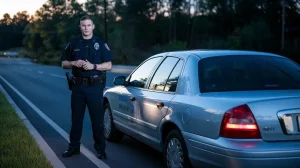
The Supreme Court of North Carolina’s opinion in North Carolina v. Rogers (Oct. 17, 2025) deserves careful study by Police officer standing beside a stopped car in North Carolina at dusk, representing the good faith exception to the exclusionary rule and Fourth Amendment search and seizure law. criminal defense and DUI defense lawyers.

TL;DR Quick Take North Carolina v. Rogers reshapes how certain suppression motions may be litigated in North Carolina. The Supreme Court interpreted the 2011 “good faith” amendment to N.C.G.S. §15A-974 as significantly limiting the scope of the exclusionary rule, allowing evidence obtained through unlawful searches to be admitted if officers relied on objectively reasonable belief in the legality of their conduct. The decision narrows the path for defendants seeking suppression and marks a turning point in how trial courts evaluate Fourth Amendment violations.

Editor’s Note: The Supreme Court’s decision in State v. Rogers addressed good-faith reliance on a judicial order, not warrantless arrests or searches. The opinion leaves open whether the same reasoning will apply to warrantless seizures or probable-cause challenges. For now, Rogers appears to narrow the exclusionary rule only in the context of judicially authorized warrants and orders.

Contact Information