 Carolina Criminal Defense & DUI Lawyer Updates
QUICK ANSWER: In North Carolina, marijuana possession remains illegal under NCGS § 90-94, regardless of changing attitudes in other states. Charlotte courtrooms now explicitly ban marijuana odor with posted signs. While the smell itself isn’t a crime, appearing in court smelling like marijuana can damage your credibility, affect sentencing decisions, and signal disrespect to judges, potentially worsening case outcomes before you say a word.
Articles Tagged with North Carolina Criminal Law
What Is the Voluntary Intoxication Defense in North Carolina?
The Voluntary Intoxication defense in North Carolina criminal law is not an excuse for unlawful conduct but an evidentiary doctrine that can negate the specific intent  required for certain crimes. It is one of the most demanding defenses to raise, requiring a high threshold of proof.
Key Principles of the Voluntary Intoxication Defense
The defense operates as a rule of mental incapacity tied to the proof of mens rea (guilty mind), specifically in relation to specific intent crimes.
The Future of the Exclusionary Rule in North Carolina
TL;DR Quick Take: The legacy of North Carolina v. Rogers reaches beyond suppression hearings. It redefines how courts balance 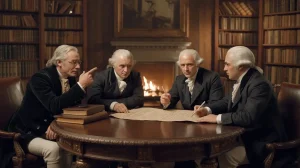 government trust against the structural necessity of constitutional discipline. Whether this evolution strengthens justice or weakens liberty depends on how future courts interpret the limits of “reasonableness” in applying the Good Faith Exception to the Exclusionary Rule.
I. Constitutional Remedies and the Philosophy of Enforcement
Constitutional rights mean little without remedies that make them enforceable. The framers of the US Constitution understood this when they created mechanisms to restrain power through process.
Knock and Talk or Search by Another Name?
If a “knock and talk” crosses the constitutional line, can what officers saw or learned still justify 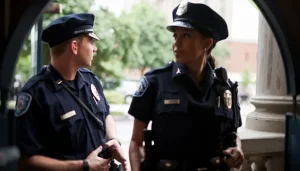 a search warrant?
TL;DR Quick Take: North Carolina v. Norman tests the limits of North Carolina’s knock and talk doctrine and asks whether a search warrant can survive when officers use observations gathered during a questionable encounter on private property.
The decision turns on three interrelated questions:
State v. Rogers: Slow Death of the Exclusionary Rule in NC?
TL;DR Quick Take: North Carolina v. Rogers could prove to be one of the most consequential constitutional rulings in North Carolina criminal  law in decades. The opinion not only interprets N.C.G.S. § 15A-974 but also redefines how North Carolina courts understand the relationship between the Fourth Amendment and Article I, Section 20 of the North Carolina State Constitution.
As applied, the Good Faith Exception articulated in State v. Rogers reverses longstanding precedent set forth in North Carolina v. Carter.
The burden quietly shifts to the accused to demonstrate unreasonableness, reversing long-standing Due Process protections and draining both the fruit and the fiber from the “poisonous tree.”
Good Faith Exception to the Exclusionary Rule in North Carolina
The Supreme Court of North Carolina’s opinion in North Carolina v. Rogers (Oct. 17, 2025) deserves careful study by  criminal defense and DUI defense lawyers.
TL;DR Quick Take North Carolina v. Rogers reshapes how certain suppression motions may be litigated in North Carolina. The Supreme Court interpreted the 2011 “good faith” amendment to N.C.G.S. §15A-974 as significantly limiting the scope of the exclusionary rule, allowing evidence obtained through unlawful searches to be admitted if officers relied on objectively reasonable belief in the legality of their conduct. The decision narrows the path for defendants seeking suppression and marks a turning point in how trial courts evaluate Fourth Amendment violations.
Editor’s Note: The Supreme Court’s decision in State v. Rogers addressed good-faith reliance on a judicial order, not warrantless arrests or searches. The opinion leaves open whether the same reasoning will apply to warrantless seizures or probable-cause challenges. For now, Rogers appears to narrow the exclusionary rule only in the context of judicially authorized warrants and orders.