 Carolina Criminal Defense & DUI Lawyer Updates
If you’re facing charges in North Carolina, there’s a good chance your case will not be resolved on the first court date, and therefore, 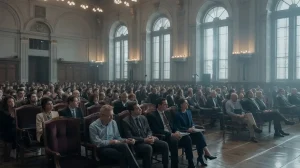 you will need a continuance. It might be continued again, and again after that. Whether you’re charged with DWI in Mecklenburg County or facing a felony in Union County, continuances are part of the system.
Some clients ask, “Why is my case taking so long?” not realizing that continuances often help the defense more than they help the State. They wonder if the judge is overlooking something or if the system just doesn’t care. Some assume a continuance means something is wrong. In reality, it’s usually the opposite.
In criminal and DWI courtrooms across North Carolina, continuances are rarely about delay for its own sake. They result from crowded dockets, incomplete discovery, unavailable officers or witnesses, scheduling conflicts, or system failures that no one in the courtroom controls.
And right now, in counties like Mecklenburg and Union County NC, the Odyssey eCourts rollout has unfortunately made an already overburdened calendar even more difficult to navigate and manage.
What’s happening in Charlotte and Monroe today, relative to docket overloads and continuances, will soon reach Gaston, Iredell, Lincoln, and Rowan. If your case hasn’t been continued yet, prepare yourself. It likely will be once eCourts is implemented.
If you are facing an impaired driving charge in the greater Charlotte area, including Mecklenburg, Union, Iredell, Gaston, Lincoln, or Rowan County, the Powers Law Firm PA may be available to assist with your defense. For serious felony matters involving injury, fatality, or charges such as vehicular homicide, we consider statewide cases individually. Call 704-342-4357 to arrange a confidential consultation at no cost.
Who Controls Whether a Continuance Is Granted?
Most people are surprised to learn that neither the defense nor the prosecution decides whether a continuance will be granted, particularly when there is disagreement about rescheduling the case to a later date.
The power to grant or deny a continuance technically belongs to the judge.
Continuances: Why Cases Get Continued
Who Decides?
The Judge grants or denies continuances
Prosecutors control the docket
Common Reasons
• Missing discovery or lab reports
• Officer and witness availability
• Crowded court dockets
• System delays (Odyssey eCourts)
Powers Law Firm PA • Charlotte, NC • 704-342-4357
That decision can be based on a written motion, an oral request, or sometimes just a brief explanation offered in open court with both parties present (the prosecution and the defense) before the Court (the Judge).
Importantly, prosecutors, the Assistant District Attorneys, do control the docket in North Carolina.
They decide what cases are tried and in what order. They decide which cases will be dismissed, which cases will be prosecuted, and which cases may be offered a plea deal or a deferral.
DAs control the docket, not defense lawyers.
Quick Tip: There is no absolute right to a continuance or a set number of continuances that are allowed for either party.
Contrary to popular belief, there’s no set number you are entitled to as a defendant to prepare a defense, pay your lawyer, or obtain a substance use assessment, perform community service, or pay restitution (if appropriate).
Similarly, the State is not required to dismiss charges after a certain number of continuances “for the State.”
Furthermore, while there may be established protocols and preferences in certain judicial districts like Mecklenburg County, under the NC criminal laws and laws of criminal procedure, there’s no firm limit on how many continuances a judge may allow, especially if the Court finds good cause.
Judges possess substantial discretion over the disposition of matters in their courtrooms.
So while prosecutors may control the docket by deciding which cases to call and when, the Judge is the boss in court.
What they say goes.
And in some instances, the NC DWI law directs that a Court must grant and not dismiss a DWI charge if a chemical analysis witness is not in court.
Criminal defense lawyers often request continuances for various reasons.
The discovery might still be incomplete. A witness may be unavailable. A lab report might be missing. Or a lawyer might be scheduled for trial in another county and physically unable to appear.
Again, defense attorneys don’t control the docket.
As such, we go where cases are called, where prosecutors (and judges) expect counsel. Defense lawyers don’t have much say in the matter, other than to advise folks in the legal system of potential conflicts and other professional commitments.
As DWI lawyers and criminal defense attorney who handle a wide range of different types legal matters in the Charlotte-metro region (Mecklenburg, Iredell, Union, Gaston, etc.) calendaring is one of our most difficult, and frankly frustrating tasks – Bill Powers, Defense Lawyer
The State may ask for more time because an officer is on military leave, working a wreck, has a sick child or has been injured on the job or is in training or recertification, or because a necessary driving record has not been received from DMV or criminal history from the NCIC is needed.
Sometimes the court itself creates the delay, especially when docket collapses under the weight of too many cases and not enough hours in the day.
There is no nefarious purpose.
Everyone in the criminal justice system wants to handle cases efficiently.
No one, particularly defense lawyers, gets paid extra for continuances. Many defense attorneys charge flat rates and therefore don’t benefit financially by setting cases off to future dates.
Judges generally do not grant continuances for convenience.
Continuing cases to a later date only adds extra matters to already heavy future dockets.
They want cases to move forward.
But when the system lacks capacity, delay sometimes becomes the path of least resistance.
It happens in both directions.
A case that might have been resolved early can drag on for months because there are too many matters on a calendar, trials take longer than expected, and witnesses, for very good reasons, become unavailable for different reasons.
How Continuances Affect Defendants in Real Life
Even if your lawyer explains the reason for the delay, it can still feel like punishment.
If you’re on bond with conditions, like EHA – electronic house arrest or EM – electronic monitoring , alcohol monitoring, or weekly reporting, a continuance means living under those restrictions longer.
If your driver’s license is revoked while you wait for trial on a DWI, every reset feels like an extension of the penalty.
If you’re in custody (jail), a continuance can be devastating.
Days turn into weeks. Weeks into months. Even when you have not been convicted of anything, you’re stuck in a system that moves at its own pace, not yours.
And if you’re trying to keep a job, take care of your kids, or move on with your life, repeated court appearances and ongoing uncertainty can wear you down.
Employers get tired of hearing that you need another day off for court. Schools, family members, and family members don’t always understand why the case isn’t finished yet.
The system itself is the source of many delays.
Like our clients, defense lawyers navigate the court system, we don’t control it.
Odyssey and the Future of Continuances in North Carolina
In Union and Mecklenburg Counties, the rollout of Odyssey has made scheduling even more problematic at times.
eCourts has slowed down the system, resulting in even less court time to resolve matters.
For example, in the past, a Judge could review a court file or “shuck” in short order.
Judgments and other Court Orders could be signed with a pen, which takes a negligible amount of time.
Now, with Odyssey, judges are not allowed to “wet sign” Orders.
It takes time to sign an Order electronically.
Court dates are updated, real time, in court, also taking time.
This isn’t theory.
This is daily courtroom experience in North Carolina right now.
Odyssey was supposed to bring modernization. What it brought was confusion, delay, and disruption to basic courthouse function, especially as court personnel learn the system and adapt to the new, mandatory protocols.
That confusion has created more continuances, not fewer.
As more counties adopt Odyssey, the same delays that plague Charlotte and Monroe now will most certainly also affect Gaston, Lincoln, Rowan, Stanly, and others in the near future.
Continuances used to be blamed on individual actors. Now they’re being built into the software.
If you’re waiting for your case to be heard, prepare for a longer wait than you expected.
Are Continuances Always Bad?
Not necessarily. Continuances are a necessary and appropriate aspect of justice.
Judges know this. So do prosecutors and defense attorneys.
The reality is that your lawyer often working, for your best interests, behind the scenes, tracking discovery, filing motions, or chasing down answers that the system doesn’t always provide on its own.
Continuances are part of the job. Managing them well is part of the craft.
If you’re facing impaired driving charges in the Charlotte metro area, including Mecklenburg, Union, Iredell, Gaston, Lincoln, or Rowan County, the Powers Law Firm PA may be available to provide legal representation. For felony accusations involving serious injury, death, or vehicular homicide, we consider statewide cases on a case-by-case basis. Call 704-342-4357 now to schedule a confidential consultation at no charge. 📍 Find Powers Law Firm on Google Maps