 Carolina Criminal Defense & DUI Lawyer Updates
State v. Rogers examines the relationship between constitutional violations and judicial remedies regarding suppressing evidence in North Carolina, focusing on when unlawfully obtained evidence should be excluded and when statutory good-faith principles may permit the admission of objectively unlawfully obtained evidence (in violation of statutory or constitutional precepts) despite a defect in the underlying search.
By construing N.C.G.S. § 15A-974 to permit admission of evidence obtained through conduct later determined to be unlawful when officers acted in objectively reasonable reliance on existing legal authority, the NC Supreme Court shifts suppression analysis away from a purely rights-based inquiry and toward a somewhat more remedial framework grounded in objective reasonableness and deterrence. The decision operates as a judicial construction that narrows the practical suppression issues long associated with Article I, Section 20 of the North Carolina Constitution.
TL;DR Suppression litigation in North Carolina now turns less on abstract constitutional violations and more on the objective reasonableness of governmental reliance on external legal authority, the legal landscape confronting officers at the time judicial authorization was obtained, and whether exclusion would meaningfully deter future misconduct. Trial courts must therefore evaluate institutional knowledge, training, warrant practice, and the accuracy and completeness of information presented to judicial officials, rather than roadside judgments made without judicial involvement. For defense counsel, effective advocacy requires disciplined factual development capable of rebutting asserted good-faith reliance grounded in warrants, statutes, or court authorization, rather than reliance on doctrinal violation alone.
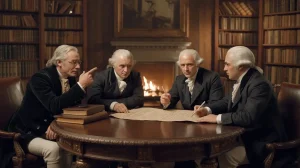 government trust against the structural necessity of constitutional discipline. Whether this evolution strengthens justice or weakens liberty depends on how future courts interpret the limits of “reasonableness” in applying the Good Faith Exception to the Exclusionary Rule.