 Carolina Criminal Defense & DUI Lawyer Updates
Cortisol, often referred to as the primary stress hormone, is produced by your adrenal glands in response to stressful situations, including anxiety-provoking encounters 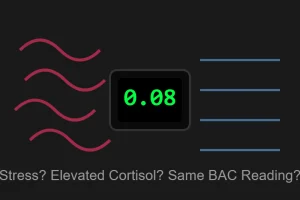 such as traffic stops, arrests, and DWI charges.
Cortisol plays an important role in regulating energy by promoting gluconeogenesis, the production of glucose from non-carbohydrate sources, and mobilizing glycogen stores.
During acute stress, elevated cortisol levels help ensure that your body has enough energy to manage the perceived threat.
However, cortisol’s influence extends beyond glucose mobilization; it can also alter liver enzyme activity and metabolic pathways.
Given that alcohol metabolism predominantly occurs in the liver through enzymes like alcohol dehydrogenase (ADH) and aldehyde dehydrogenase (ALDH), any significant changes in liver metabolism theoretically could impact alcohol processing.
Can Stress Hormones Affect Breathalyzer or Blood Alcohol Testing Accuracy?
Understanding Cortisol: Your Body’s Stress Response and Alcohol Metabolism
Despite the theoretical plausibility, scientific examination tends to indicate that stress-induced cortisol elevations during a DWI arrest do not meaningfully alter measurable blood alcohol concentration (BAC).
Alcohol metabolism primarily relies on hepatic enzymatic processes dependent on cofactors like NAD+, but the transient cortisol surge during acute stress is unlikely to substantially affect these enzymatic reactions.
Breathalyzer devices, such as the Intoximeter EC/IR II that is frequently used by North Carolina law enforcement, detect ethanol via infrared spectroscopy and electrochemical fuel cell technology.
These machines specifically measure ethanol molecules and are not directly influenced by cortisol.
While elevated cortisol levels might affect glucose or other metabolic parameters, the scientific literature does not support the idea that these effects significantly alter BAC readings or breathalyzer accuracy.
On the other hand, stress-related hyperventilation or rapid breathing during a traffic stop could theoretically affect breath-test results.
However, the Intoximeter EC/IR II is designed and calibrated to reduce interference from such physiological conditions, likely minimizing the practical impact of acute stress responses on test accuracy.
Legal Implications: Cortisol Levels and North Carolina DWI Defense
From a DWI defense lawyer legal perspective, introducing cortisol or stress-related arguments in a DWI defense merits consideration before going down that path.
North Carolina courts evaluate the admissibility of scientific defenses under the rigorous Daubert standard and in large measure is also directly controlled and/or addressed within the North Carolina Administrative Code (NCAC) and the NC General Statutes.
Given current scientific understanding, claims that acute cortisol elevation directly affects measured BAC or breath-test accuracy would likely face significant judicial skepticism. Download for free the North Carolina DWI Quick Reference Guide to review the relevant NCAC breath testing device provisions (and general statutes) here: NC DWI Quick Reference Guide
It doesn’t take a substantial intellectual leap to assume prosecutors would reasonably counter any such defense claims with established scientific consensus indicating negligible or nonexistent impact of Cortisol (vis-a-vis stress) to the BAC.
As such, effective defense strategies related to cortisol or stress hormones would be more effective by focusing less on physiological interference and more on procedural accuracy, testing device calibration, and documented adherence to testing protocols.
At the same time, understanding stress dynamics can still be valuable for DWI defense.
Stressful situations, subjective anxiety, or panic experienced by defendants during traffic stops can influence cognitive function and behavior, offering potential context in cases where officers document impairment through subjective observations such as field sobriety tests or “SFSTs.” To learn more about “sobriety tests,” check out our post: Understanding Field Sobriety Tests in North Carolina.
Defending DWI Charges Involving Stress and Elevated Cortisol Levels: Practical Strategies
Given the current state of scientific research, defense strategies regarding stress and cortisol should pivot toward practical and well-supported arguments.
It makes sense, therefore, to focus on ensuring procedural fairness, confirming the calibration and accuracy of BAC testing devices, and, likely more importantly, challenging subjective observations of impairment by the charging officer.
DWI defense attorneys might want to consider retaining an expert toxicologist to clearly communicate the limited impact of acute cortisol elevation on ethanol metabolism and breathalyzer accuracy.
A properly qualified forensic impaired driving expert would likely be able to refute scientifically unsupported assertions by prosecution witnesses, helping defense counsel maintain credibility in front of the finder of fact, including judges and juries.
As such, providing context around stress and anxiety during DWI stops likely remains relevant, particularly in cases heavily reliant on subjective impairment assessments relative to either probable cause to arrest or the appreciable impairment prong of N.C.G.S. 20-138.1. Want more informationa about what is DWI in North Carolina, check out our DWI / DUI Impaired Driving FAQs.
Demonstrating the defendant’s heightened anxiety, confusion, or panic, supported by credible expert testimony, can effectively contextualize perceived impairment and influence jury perceptions.
What the Science Actually Says about Stress, Cortisol, and BAC
Analysis of available scientific literature appears to indicate that while cortisol levels surge during stressful situations such as a DWI arrest, these elevations likely would not substantially affect measurable BrAC – Breath Alcohol Concentration, blood alcohol concentration (BAC), or even roadside “breathalyzer” accuracy on the Intoximeter FST.
The enzymatic pathways responsible for alcohol metabolism remain largely unaffected by sudden, short-term cortisol fluctuations occurring during acute stress.
For defendants and legal professionals navigating North Carolina DWI charges, understanding this scientific reality is important. While elevated cortisol and stress-induced physiological responses can significantly impact subjective impairment perceptions, in all likelihood, they do not meaningfully alter objective BAC measurements.
Powers Law Firm provides experienced, scientifically informed representation in complex DWI cases across Mecklenburg, Union, Iredell, Gaston, Lincoln, Rowan, and Stanly Counties. If you have questions or face serious DWI charges, contact us for a confidential consultation at 704-342-4357. The stakes are real. So is the work.
📍 Find Powers Law Firm on Google Maps
About Bill Powers
Bill Powers is a recognized attorney known for his extensive experience in impaired driving defense. He publishes the North Carolina DWI Quick Reference Guide, an essential resource provided free of charge and available for download to lawyers, legal professionals, and others interested in the impaired driving laws in North Carolina.
Bill Powers regularly teaches on topics like DWI courtroom protocols and practices at the Charlotte-Mecklenburg Police Training Academy. He has also presented for other respected professional organizations, notably chairing the 2025 North Carolina Advocates for Justice Criminal Masters of Advocacy, focusing on Impaired Driving Defense. Additionally, he has previously presented materials at seminars for the North Carolina Conference of District Attorneys, including sessions designed specifically for Drug Recognition Experts (DREs) and Assistant District Attorneys.
Bill Powers’ peers have consistently recognized his professional achievements, honoring him with inclusion in Super Lawyers North Carolina Magazine, including Top 100 in North Carolina and Top 25 in Charlotte (2025). Both Bill Powers and Powers Law Firm have earned repeated recognition by Best Lawyers in America and Best Law Firms in America. In addition, he received the prestigious North Carolina State Bar Distinguished Service Award, highlighting his contributions to the legal profession.
In 2025, Bill Powers continues to serve on the North Carolina Governor’s Statewide Impaired Driving Task Force (first appointed by Governor McCrory in 2014), reflecting his commitment to policy development and advocacy in impaired driving law. His career emphasizes professionalism, integrity, and dedicated client advocacy.