 Carolina Criminal Defense & DUI Lawyer Updates
Every year, the last Monday in May brings the hum of lawnmowers, the smell of grilled food, and the first inklings of summer. For 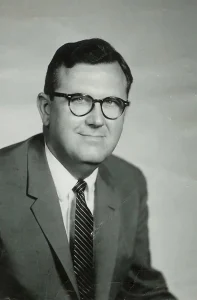 many, Memorial Day is a chance to gather with family, enjoy a day off work, or take a short trip.
I understand that. I enjoy those things too. But for me, Memorial Day has come to mean something more, something quieter, and something harder to name. That has everything to do with my grandfather, Robert L. “Bob” Conroy.
My maternal grandfather, “Papa,” served as a medic in World War II. He was stationed in Okinawa, one of the most brutal and prolonged battles of the war.
The fighting there was not just fierce. It was personal, close, and relentless. The casualty numbers were staggering. But numbers never tell the whole story.
My grandfather rarely spoke about Okinawa, at least to me. What little I know comes from my teenaged, in-artful questions and his patient, understated responses. They mean a lot to me, now that I’m about his age when he shared them with me.
Thinking of “Robert L” on Memorial Day
“Robert L,” as his aging boomer children (he had 7) and some of us older grandkids refer to him, did not glorify service.
He respected it. He respected the men who never made it home more than anyone.
As I understand it, he worked in what folks my generation might understand as a “MASH” type surgical medic unit. Think messy field surgery in about the worst conditions possible without the laugh track.
He wasn’t a doctor, but he performed procedures on wounded soldiers, patching them up as best he could, knowing full well that not all of them would survive.
As a medic, he saw savagery no person should ever have to witness. He did his job so others might literally live.
I remember lots of summertime family cookouts with Robert L. I can’t recall whether Memorial Day was any different than the other holidays we celebrated like 4th of July or graduations or Father’s Day.
On Memorial Day, did Robert L. think of his service? Did he think of the countless faces he tried to save but couldn’t on that island of hell or was it better just to focus on getting the coals going and everyone fed?
It may have been a hard day for him; I was too young and too ignorant to truly understand what he’d been through about twenty years before I’d been born.
And yet, there we were, heating up coals for the newfangled (at the time) big black Webber grill, preparing baked beans, potato salad and brats (always brats) for the family get together.
Why do we celebrate Memorial Day?
Memorial Day, originally known as Decoration Day, began in the years following the Civil War. The country had torn itself apart. Communities in both the North and South began the practice of decorating the graves of soldiers with flowers.
It was not about politics. It was about grief. It was about honor. It was about remembering that behind every uniform was a son, a father, and a friend. The holiday became official in 1971, but its spirit is much older. It is about acknowledging loss, not glorifying war.
As a lawyer, I think a lot about what those men and women died for.
I try to live up to the example that Robert L. set, to quietly serve 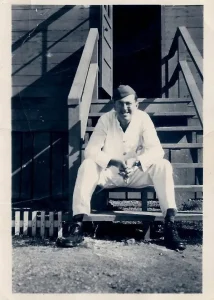 others in the midst of sometimes insurmountable odds, to not complain (too much), and to treat those I serve with compassion and patience.
These are not abstract ideas to me.
They take form in daily practice. Whether in the South Pacific or Europe of World War II, or Vietnam or Iraq or Afghanistan, our servicewomen and men, our fellow citizens, did not die for barbecues.
They did not die for slogans or hashtags. Those are symptoms of an organized society.
They died for something more difficult to define: a system of government that places its trust in the rule of law, in institutions rather than personalities, and structure rather than popularity or the easy path.
That does not mean we always get it right.
Our legal system is imperfect, sometimes painfully so. But its design, the idea that we resolve disputes through courts rather than violence towards one-another, that rights still matter even when they are inconvenient or unpopular, and that each person has the opportunity to be heard, is worth defending.
Defending freedom in our institutions and system of justice
That defense has not only taken place on battlefields, in places most Americans could not locate on a map. It takes place in the halls of justice, in our framework of government, and in the never ending battle to protect the Rule of Law.
Even if you do not agree with the purpose or efficacy of the wars and battles we’ve waged, I think it reasonable to respect and honor those who fought them on our collective behalves.
I don’t remember talking politics with my grandfather.
I did ask him once how a society could elect a leader like Hitler or Stalin or Pol Pot. I remember his answer being very general.
After what he’d seen and lived, I think what really mattered to Robert L. was that you stood by your word, that you took care of your neighbors, and that you did not mistake disagreement for hatred.
He believed in America. Not a perfect version of it, but a better one, one worth working for.
He taught me reasonable minds can differ and that we still owe one another a measure of decency.
That still matters today.
Memorial Day: Remembering, Appreciating, and Paying Forward
We live in a divided time. That is not news.
I try to remind myself, and anyone willing to listen, that we are still one country, one people.
Yes, we are messy, loud, and frustrating. That is part of being free.
Real freedom means allowing others to live differently than we might choose for ourselves. Real patriotism means valuing someone’s right to speak, even when we disagree with what they are saying.
Memorial Day is a moment to breathe.
It is not about scoring points at a dinner table dispute. It is not about giving someone “what for.” It is not about winning.
To me, it is about remembering. It is about thinking and gratitude, expressed not in fireworks or flags, but in reflection. And perhaps, it is about becoming a little more patient with and kinder to one another.
Maybe Memorial Day should be a time when we shower love on family and friends, even though their opinions annoy us beyond belief.
The freedoms we reference, such as free speech, the right to privacy and the freedom to be left alone, to due process and equal protection, are not theoretical to lawyers; nor are they theoretical to the people who died wearing a uniform.
These freedoms exist in constitutions and case law, but also in the space between us. They live in the room we give each other to exist, to change, and to speak.
The legal system tries to preserve that. It does not always succeed, but it continues to try.
The importance of setting a day aside to remember and give thanks
If I’m able to express anything here, it is this: Those freedoms I’ve discussed apply to everyone, conservative and liberal, God fearing and agnostic, equally.
Memorial Day is not about me or you. It is not even about my grandfather (he made it back to his family safely), although I think of him more on this day than almost any other.
That’s because he instilled very deeply in my heart that we should always think about the ones who never came home, not just on Memorial Day weekend.
We should remember and appreciate those who will not walk into the backyard with a cold drink. Those who are not here to argue about politics, eat burgers and hot dogs off paper plates, or chase grandchildren or cuddle babies.
It is about honoring the weight of their silence and their absence.
So yes, enjoy your day. That is part of what freedom allows.
But, please, also take a moment to remember what the Memorial Day 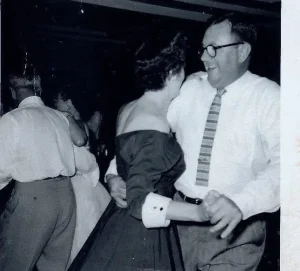 holiday means. Maybe talk to your kids about it. Maybe look around and think not only about those who died, but about what they died for.
Don’t do so in a performative way or during a moment to shut conversation down, but rather as an opportunity to open your heart a little more than it was yesterday.
America is a large and complicated place. We are not going to agree on everything.
Memorial Day offers a rare chance to remember that the people we disagree with, even those we find maddening, are still our countrymen and countrywomen.
They matter more than our favorite pundits.
They matter more than our allies overseas.
The Constitution begins with “We the People.” It does not mean only those who vote like us or look like us or think like us.
It means all of us. That is what those soldiers fought for.
That is what my grandfather tried to protect with his hands and with bandages in a field hospital on the other side of the world.
And I’d be remiss in failing to acknowledge this important fact.
Robert L. didn’t consider race or religion or politics in that battlefield hospital. He stitched up the broken bodies of both American and Japanese soldiers.
Let that sink in.
This Memorial Day, I will think of him.
I will think of those he could not save.
And I will try, in my own small way, to live in a manner that honors the freedoms they gave their lives to protect.
That may mean listening more, talking less, and doing the difficult work of being quietly and truly grateful; not just on a long weekend, but every day that I have the privilege of living in a country shaped by the Constitution’s purpose to “establish justice and insure domestic tranquility.”
That is worth remembering.